 |
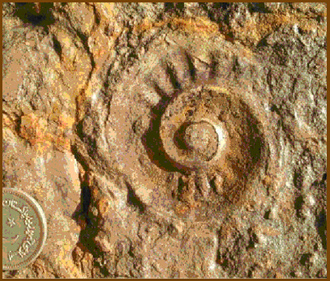
The Lower Eocene Nammal Formation and Sakesar Limestone
are exposed throughout the Salt Range and Surghar Range,
and are rich in age
diagnostic larger foraminifera, including
Nummulites, alveolinids and assilinids. The Choegali Formation…is only exposed in the central Salt Range, where it bears age-diagnostic larger foraminifera like Nummulites and
alveolinids.
Source: Sameeni, S.J. (2009) The Salt Range: Pakistan's unique field museum of geology and paleontology.- In: Lipps, J.H. & Granier, B.R.C. (eds.), PaleoParks - The protection and conservation of fossil sites worldwide.- Carnets de Géologie / Notebooks on Geology, Brest, Book 2009/03, Chapter 6
Cotter said that the
Khewra Nummulites discovered by Gee “occurred in association with plant
fragments.” He further noted that “plant fragments were also found by Mr. Gee
in the Salt Marl at the Nila Wahan.” E.H. Pascoe cited a 1933 report that at Kalra
Wahan, a sample of salt marl “yielded not only carbonized stem fragments but
also several small leaves of apparently dicotyledenous type.” Pascoe also noted
that Gee found a small piece of fossil wood in the reddish marls of the Salt
Range Formation. |